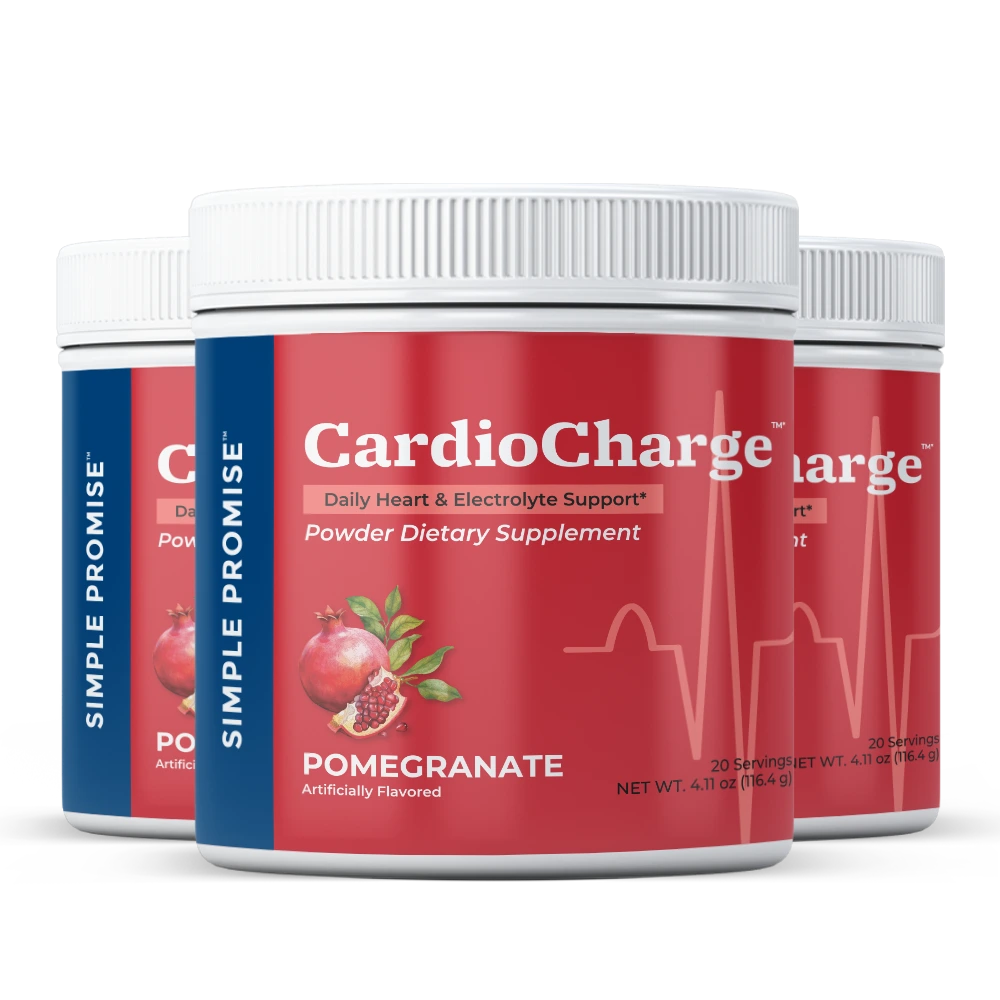
CardioCharge electrolyte support starts with a simple idea: staying hydrated is about more than water. The pomegranate powder includes potassium, sodium and magnesium, three minerals that carry an electrical charge in body fluids and help regulate how the body handles water. Here is what each one does, what CardioCharge provides and how to think about the amounts.
What Are Electrolytes?
Electrolytes are minerals that dissolve into charged particles called ions. Those ions help move water across cell membranes, carry nerve signals and trigger muscle contractions, including the heartbeat. Your body cannot make minerals, so they must come from food and drink.
Why hydration involves more than water
Drink a lot of plain water and the body still needs sodium, potassium and other minerals to hold the right amount of fluid inside and outside cells. That is why electrolyte drinks are popular with active people and with those who sweat a lot. CardioCharge is a sugar-free way to add minerals to your water.
Potassium: 380 mg Per Serving
Potassium lives mostly inside cells. It contributes to normal fluid balance, nerve signaling and muscle contraction, and it is the electrolyte most often linked with heart nutrition. Food sources include potatoes, beans, bananas, leafy greens and yogurt, and many adults do not reach the intake they are aiming for.
CardioCharge provides 380 mg as potassium citrate. People with kidney conditions or advice to limit potassium should talk to a healthcare professional before using a potassium-containing supplement. The potassium entry has more detail, and the NIH fact sheet is a good outside source.
Sodium: 140 mg Per Serving
Sodium sits mostly outside cells and helps regulate fluid balance, nerve function and muscle activity. It often gets a bad reputation because processed foods contain so much of it, but the body needs some sodium to work normally.
The 140 mg in CardioCharge, supplied as sodium citrate, is modest, but it counts toward your daily total. Anyone on a sodium-restricted diet should factor it in and follow their clinician’s guidance. See the sodium entry for context.
Magnesium: 190 mg Per Serving
Magnesium takes part in hundreds of enzyme reactions. It supports normal muscle and nerve function, energy metabolism and electrolyte balance. CardioCharge uses magnesium glycinate, a form bound to glycine that is often chosen for gentleness.
Magnesium is the bridge ingredient in the formula. It belongs to the electrolyte pathway, yet it also supports the enzymes that handle energy metabolism, the same area where D-Ribose operates. Read the magnesium entry for more.
Why the Minerals Come With Extras
A standard electrolyte mix stops at minerals. CardioCharge adds D-Ribose (3,000 mg) for cellular energy nutrition, hibiscus (470 mg) and Hytolive® olive extract (30 mg) for plant polyphenols and L-Glycine (1,000 mg) for amino acid nutrition. That is the difference between an electrolyte powder and a heart-and-electrolyte formula. The ingredients article compares all seven.
Using an Electrolyte Drink Sensibly
- Follow the serving size on the label; more is not better.
- Count the minerals toward your daily total, especially sodium and potassium.
- Keep drinking water and eating a varied diet.
- Ask a clinician first if you have kidney disease, heart conditions or take medication that affects electrolytes.
Who should be especially careful
People with kidney conditions, anyone told to restrict potassium, sodium or magnesium, people taking certain blood pressure or heart medications, and anyone pregnant or nursing should seek professional advice. That is not a reason to worry; it is simply how responsible supplement use works. The disclaimer has the full statement.
How This Fits the Bigger Picture
CardioCharge is a dietary supplement designed to complement hydration, balanced eating and activity. It is not a treatment for any condition and does not replace medication. For a look at the energy side of the formula, see how CardioCharge works; for the supported areas, see the benefits article.
Electrolytes and Everyday Situations
People tend to think about electrolytes during exercise, hot weather, travel and busy days when they may drink less than usual. On those days, plain water may not be the whole answer, and a mineral drink is one convenient option. That is a practical observation, not a medical one, and individual needs vary.
Food first
Whole foods remain the best source of minerals: beans, potatoes, leafy greens and yogurt for potassium; nuts, seeds and whole grains for magnesium; and ordinary table foods for sodium. A powder complements that foundation rather than replacing it.
Reading your own needs
If you are not sure whether an electrolyte supplement suits you, a healthcare professional can help you decide, especially if you track blood pressure or take medication. Bring the label from your tub to that conversation.
Packages and Guarantee
One tub is $49, three tubs are $129 ($43 each) and six tubs are $198 ($33 each), all with free shipping and a 365-day money-back guarantee. See the official overview or return to the CardioCharge home page to compare, and check customer feedback before you decide.
CardioCharge essentials: CardioCharge home page official overview reviews ingredient breakdown